Produkte von Sonstige Hersteller


Sturdy universal model of a liferaft holder.The length of the side sections is infinitely adjustable, allowing the holder to be used for various container sizes from different manufacturers. The length of the container can be between 640 and 840 mm. The minimum width is 400 mm.The bracket is cleanly manufactured from A4 stainless steel tubing (AISI 316) with a diameter of 25 mm.The four robust stainless steel clamps with matching screws supplied allow the bracket to be securely mounted on deck.There are only two fixing points for attaching to the pushpit or railing. With at least two additional double pipe clamps (see ‘Accessories’), the bracket can be attached much more securely to the pushpit.The liferaft container is held in the holder by a stainless steel strap. The tension lock on the strap can be locked (in the harbour) with a padlock (included in the scope of delivery).The illustration may differ slightly from the article.


Simple rack for life rafts made from plastic to be screw mounted on deck. Shipping with 2m long belt straps, width of the belt strap (B1) is 30mm.


Senhouse sliphook HAMMAR TR-0001 made of stainless steel for attaching the liferaft. The hook can be used alone or in conjunction with a hydrostatic release unit (HRU), such as the HAMMAR H20R.The Pelikan hook is attached to the swap strap (see photos) and allows the webbing that secures the liferaft in its holder to be pulled through tightly. In an emergency, the hook can be quickly released by hand so that the life raft can be thrown into the water.If this was no longer possible before the ship sank, the life raft is released by the hydrostatic release unit. At a water depth of 1.5 - 4 metres, a spring-loaded knife automatically cuts through the lashing of the life raft, which then slips out of the senhouse sliphook. This allows the raft to float freely.Technical featuresStainless steelLength: 195 mmWeight: 200 gMaximum working load: 15 kN


Multi-use thermometer for air and water in an unbreakable green plastic housing.The thermometer scoops up approx. 50 ml of water.Large hanging bail.Dimensions: length 300 mm, diameter 40 mm. Measures from -30°C to + 50°C.

Hour glass, glass vial in strong polished-brass housing.For logging distances, timing tooth-brushing, and cooking eggs.


Equipped with recovery strap, in order to make it easier to bring animals aboard. Colour: orange.

Small drift anchor for lifebuoys, lifebuoy collars or man-overboard marker buoys. The drift anchor prevents the person or marker buoy from drifting.


Safety lanyard made from strong, black/orange double webbing with 3 stainless steel snap hooks.The safety line complies with DIN EN ISO 12401 (formerly 1095).Lengths:1 x 80 and 1 x 130 cm.

Life line, made from strong webbing, 30 mm wide.Very comfortable, because bungee cord inside the life line retracts it to half its lenth.Extended length 200 cm.With 2 strong asymmetrical stainless steel safety carbine hooks.Conforms DIN EN ISO 12401 (former 1095).

Simple plastic pendulum inclinometer with pendulum made of chromed brass.Dimensions: 65 x 105 mm. Weight: 30 g.

Hand sanding block for Velcro sanding discs Ø150 mm. This makes sanding small corners child's play. No slipping of the abrasive thanks to the Velcro connection, durable design

Silicone remover is a high-quality cleaner with a short evaporation time. Suitable for the complete removal of silicone oil residues, greases, oils and waxes before coating or sealing.

Maritime weather station with round aluminium frame, (gold) anodised and brushed, for wall mounting or standing.Displays the relative air pressure with air pressure tendency as well as the air pressure difference of the last hour and the last 3 hours (in hPa). Up to four alarm limits can be set. The large bar chart shows the change in air pressure, optionally for the last 1/3/24 hours.Radio-controlled clock with date, time setting and time zone can also be corrected manually.Indoor temperature and humidity display. Maximum and minimum values for temperature, humidity and air pressure can be called up - with automatic or manual reset.Power supply: 2 x 1.5V AA battery (not included).Dimensions: D x H 160 x 32 mm. Weight: 250 g (without batteries).Accessories: Up to three external thermo-hygro transmitters (46 x 128 x 25 mm, 63 g without 2x 1.5V AA batteries) transmit temperature and humidity from outside, machine room, etc. by radio.Technical data:Relative air pressure with air pressure tendencyLarge bar chart for air pressure changes in 3 optional time periods: 24 hours / 3 hours / last hourPermanent display of the air pressure difference of the last hour and the last 3 hours (in hPa) with 4 adjustable alarm limitsIndoor temperature and humidityMaximum and minimum values for temperature, humidity and air pressure with automatic or manual resetRadio-controlled clock with dateManual time setting and time zone correction possible


Protect your boat with fender socks. A fender cover offers protection against scratches and rubbing marks from the fender on the boat hull and effectively prevents squeaking and fender abrasion. The covers also prevent the fenders from getting dirty and protect them from UV radiation. The fender socks are washable and fit perfectly with POLYFORM long fenders or corresponding fenders from other manufacturers.The fender cover is stretchy and can be easily pulled over the fender. It can be attached to the fender with an elastic band.Color: Black Material: Acrylic

Personal emergency transmitter that can be worn in its neoprene pocket in the lifejacket or on the oilskin. The sMRT ALERT MOB can be activated both manually and fully automatically (by contact with water). Once activated, the DSC distress signal is sent automatically to alert nearby vessels to the person who has gone overboard. The activation of the MOB and the transmission of the DSC signal are indicated by an acoustic signal and a strong flashing of the strobe LED. The position of the MOB is transmitted in real time via AIS. GPS and Galileo signals are combined for this purpose.As soon as the DSC distress call is received by a ship, a confirmation is sent to the MOB. The DSC alarm is then deactivated for all other ships. The position of the MOB is still transmitted via AIS.In the event of a false alarm, there is a delete option to cancel false activations.Technical featuresFrequencies: 161.975/162.025 (AIS) 156.525 (DSC channel 70)Battery runtime: > 12 hours at -20 °COperating temperature: -20 to 55 °CDimensions: (L x W x H) 137 mm x 62 mm x 26 mmWeight: 212 gStandards and approvals: RTCM SC11901.1, EN303 132 V2.1.1The sMRT Alert complies with the standard for AIS Man Over Board devices (AIS MOB standard IEC63269:2022) and is certified accordingly. The standard (ECDIS 63269 IEC 2022) from January 1, 2021 states that all AIS MOB devices with DSC (Digital Selective Calling) must also have a DSC receiver. In addition, all automatic mechanisms must be able to be switched off.The sMRT beacon management app can be used with an NFC (Near Field Communication) enabled smartphone.App functionsRegistration of the productSignal and fault checksViewing test logsChecking the current battery statusCreating travel routes that can also be sent


330 cm long rescue ladder, which is stowed in a robust, optionally white or black PVC bag. The bag (280 x 254 x 60 mm) with reflective strips is attached to the pushpit, for example, using two black straps with satin stainless steel buckles + 2 TENAX press studs.The signal yellow 5 mm line is left hanging outboard. If necessary, the ladder can be pulled down from the bag by the person in the water.The ladder made of black polyester tape has eleven steps reinforced with fiberglass rods, which are also visible in the dark thanks to their FLUO stripes. The 25 cm wide steps are 27.5 cm apart.When installed correctly, the rescue ladder complies with DIN EN ISO 15085:2024 (Kleine Wasserfahrzeuge - Schutz vor dem Überbordgehen und Mittel zum Wiedereinsteigen / Small craft - Protection from falling overboard and means of reboarding).


The Nitra Marine 360° is a fixed mooring light for watercraft. It is approved in accordance with § 3.02 of the Rhine Police Regulations of 19.12.1994 and has a light range of 1,000 meters with clear visibility and a dark background.With suspension eye for quick attachment. Plastic housing and lens made of impact-resistant material, cadium-free, recyclable. With automatic twilight function, which ensures that the light switches on in the evening and off again in the morning. Electronics protected against moisture (splash-proof to IP 54).Powered by two 6V dry batteries (art. no. 3351-101, see accessories).A key for opening the battery compartment can be ordered as an additional accessory (art. no. 3351-105).Available with flashing/continuous light (switchable).The light has two push-button switches (small holes in the housing). The left-hand switch can be used to switch the light on and off. The right switch can be used to set it to flashing light or continuous light.


BC coupling key for fire extinguishing valves.The key is made of malleable cast iron and painted red.


Volker Pesch sets off alone in a Zeesboot to explore the unique Bodden and Haffe - these shallow waters behind the coast of the Baltic Sea.The course of the trip through the Bodden chain from Dierhagen on the Saaler Bodden, through the Strelasund, into the Greifswalder Bodden, up the Peenestrom and to the Polish harbors on the Oderhaff is the central theme of his atmospheric essay. It also deals with the birdlife, the history, the biotope and the light above the water. It is also a declaration of love for the original, simple sailing of a wooden boat without any technical frills.When Volker Pesch realizes that he likes the smell of kerosene when lighting the stove on board in the evening, he reminisces about a "chandler for old ships. He then stocks tow and pitch for caulking the planks, linseed oil and root tar for preservation, braided hemp ropes, wooden blocks and jufferns for bracing the masts. And heavy boatbuilding tools, navigation lights, stoves, lamps, cast-iron ship's toilets - in short, everything that makes my heart happy."In the appendix, the book contains specific and special tips and links to destinations. QR codes take you further. A map makes it easy to follow the course of the trip.After studying political science, history and philosophy, Volker Pesch moved from Cologne to Greifswald in the mid-1990s as a research assistant. After gaining his doctorate and a permanent position as a civil servant, he left the university circus and opened a sailing school on the Greifswalder Bodden, chartered sailing yachts and helped build up a maritime youth hotel. He then became a copywriter and designer with his own agency and time for sailing. Among other things, Volker Pesch was the owner and skipper of the traditional ship NORDWIND, co-founder of the Greifswald museum shipyard and chairman of the Greifswald museum harbor. He continues to write to this day: articles for newspapers and magazines, crime novels, short stories and non-fiction books.144 pages, with photographs, maps and other illustrations, hardcover with ribbon marker, size 15 x 21.5 cm.European essays on nature and landscape (EENL)In its EENL series, Hamburg-based Klaas Jarchow Media Buchverlag (KJM) collects authors' texts on landscapes and natural phenomena in Germany and Europe. The edition is intended to create an up-to-date European library of landscapes and natural phenomena. Various landscapes are described in their peculiarity. The authors have free rein, their personal approach to the respective landscape determines and guides the text. They are free to choose their focus, be it geological history, biology, politics or poetry.The very high-quality and lovingly designed books in the European essays on nature and landscape series are printed by the Austrian printing company Gugler to the highest possible sustainable and health-friendly standard. Only materials that are harmless to humans, animals and the environment are used for climate-positive production.

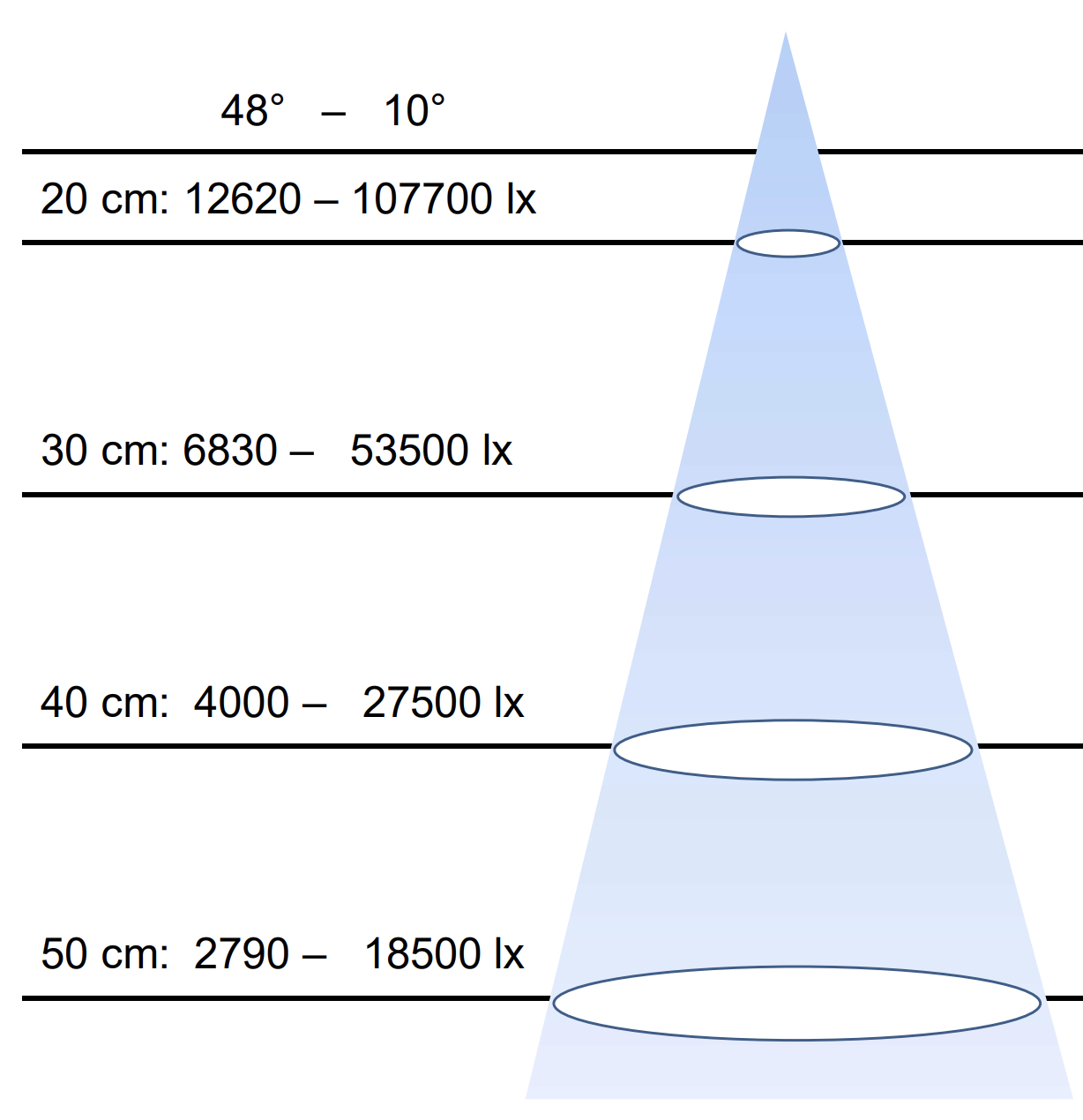
This high-quality LED flexible arm light with 700mm long gooseneck and finely focusable light cone of 4 - 48° is suitable for either wall or table mounting. It can therefore be used either as a card table light, as a task light or as a machine light with a protected switch and IP20 protection class. The flexible arm positioning and adjustable light cone allow the light to be directed precisely where it is needed.The gooseneck luminaire is equipped with an integrated LED converter in the luminaire base, which is designed for a supply voltage of 100 - 240V~/50-60 Hz.



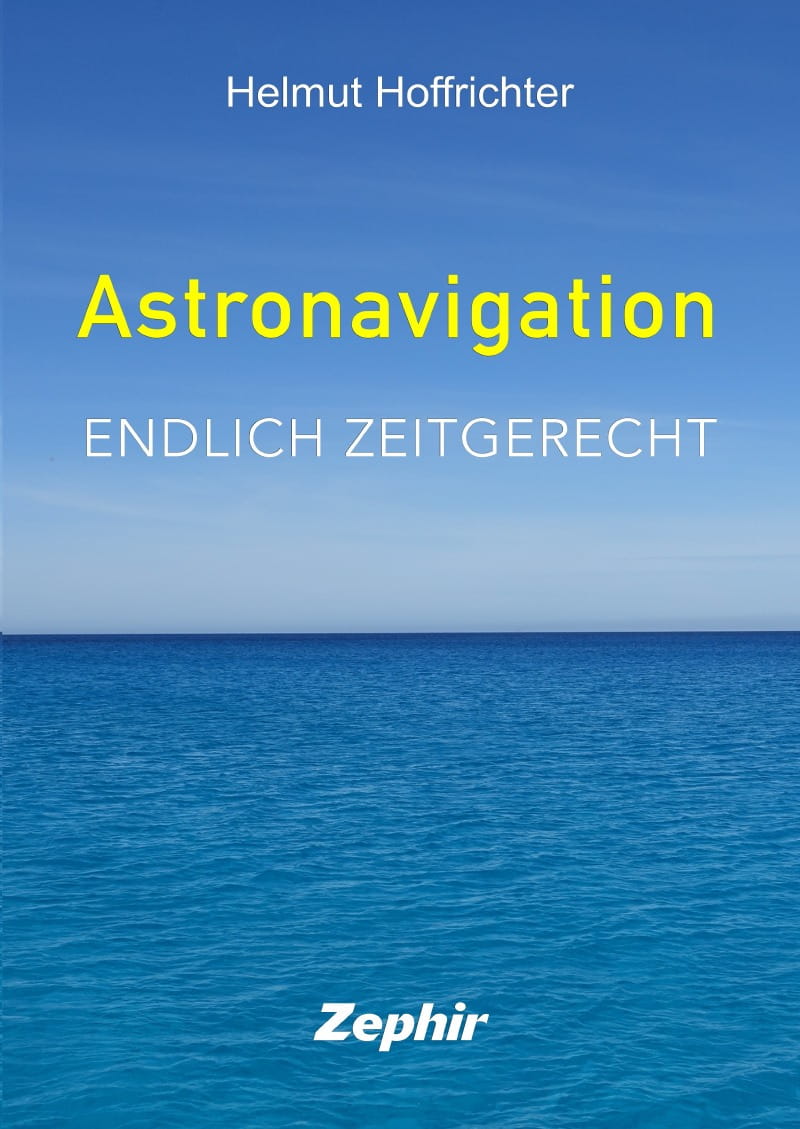
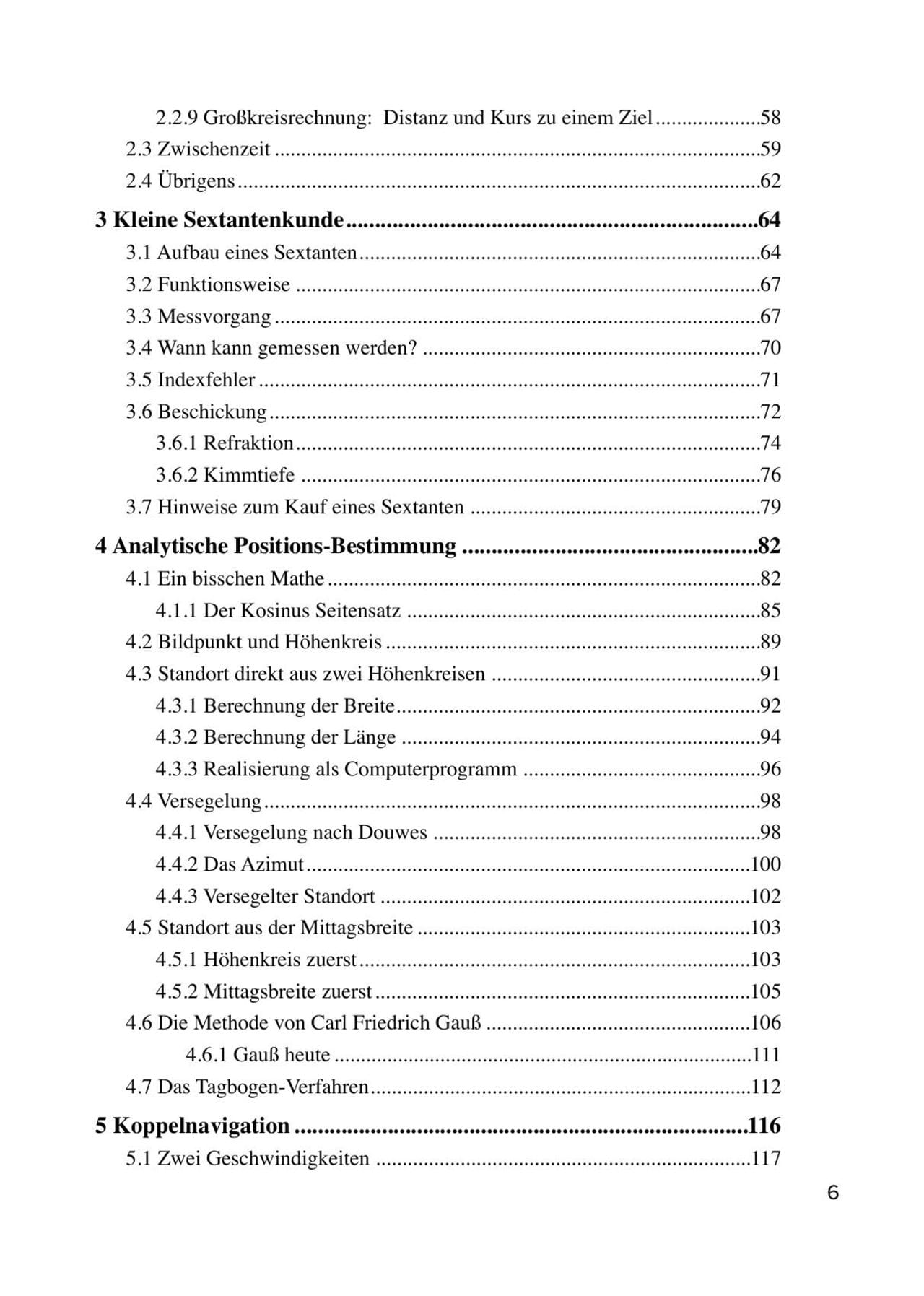
Astronavigation has the status of a secret science from the last millennium - interesting, demanding, completely outdated and far too strenuous. Most water sports enthusiasts only study it - if at all - in preparation for an exam, such as the German Sporthochseeschifferschein (SHS) or the British RYA Yachtmaster Ocean.In the event of a total power failure on board or interference with satellite signals, astronavigation is still regarded as THE backup for GPS & Co. But who can really switch to the navigation system of our ancestors on an ad hoc basis or even has the necessary nautical documents on board?Helmut Hoffrichter has developed a completely computerised method of determining location using the sun and a sextant, which he calls ‘postmodern astronavigation’. The revised, expanded 2025 edition of his book "Postmodern Astronavigation. Travelling with the sun" has been published.The book begins with an easy-to-understand review of the history of astronomical navigation. Hoffrichter then introduces his self-developed app ‘Circle of position navigation’ (Apple) and ‘Sun Navigation’ (Android).A sextant is used to measure the distance to the unmistakable sun. For the sake of simplicity, planets and fixed stars are left out as natural celestial bodies. After measuring the elevation angle, astronavigation traditionally begins with an extensive mathematical calculation and then a graphical approximation method. This was devised in 1875 by the French naval officer Marcq Saint-Hilaire (1832-1889) as an ‘emergency solution’ that was solely due to its time.Although mathematically exact navigation methods have been known since the mid-18th century, the calculation could not be automated without a computer. In Hoffmeister's app, the elevation angle measurements can simply be entered on a mobile device. Of course, the tablet or smartphone would have to run independently of the on-board power supply failure.The long-displaced methods of mathematicians Johannes Keppler (1571-1630) and Leonhard Euler (1707-1783) as well as the ephemeris are stored in the software, which performs the location calculation at lightning speed. After using the sextant, ‘postmodern astronavigation’ is as easy to use as the familiar satellite navigation on the chart plotter. Extensive nautical documentation is not required, nor do you have to do any calculations or drawings yourself.With ‘postmodern astronavigation’, a location can be determined more precisely with the help of the sun than with the Saint Hilaire altitude difference method. Since this does not even require a gissort, the art of earlier navigators is simplified to such an extent that a genuine, easy-to-use, practical navigation backup is now available.The chapters in detailHistory of astronavigationThe Sun Navigation appA little sextant loreAnalytical position determinationDead reckoningGreat circle calculationThe equation of timeAppendix, including an extract from the 1809 publication by Carl Friedrich Gauss (1777-1855) in which he solves the two-height problem188 pages, 70 illustrations and 15 tables, format 14.8 x 21 cm, hardback. German edition.



What drives people to embark on a journey across the open sea completely alone? In order to find an answer to this question, Richard J. King looks at a number of unconventional personalities in "The History of Singlehanded Sailing". They dared to conquer the oceans completely on their own, often in tiny ships, befriended birds, named their equipment, crossed geographical, physical and mental boundaries and often disappeared forever.King spans an arc from Joshua Slocum, who from 1895 was the first known solo sailor to circumnavigate the world with the simplest of means, to Sharon Sites Adams, who in the 1960s, shortly after setting foot on a sailing boat for the first time, crossed the Pacific accompanied only by her turtle. And last but not least, the gripping account of his own crossing of the Atlantic, which almost came to a fatal end.Richard J. King graduated from the University of St. Andrews with a PhD in Marine Literature and Creative Writing. He is currently a Professor of Maritime History and Literature at the SEA Education Association in Woods Hole, Massachusetts. He has sailed the Pacific and Atlantic Oceans for 30 years, crossing the latter solo on an 8.7 meter sailboat in 2007.Translated from American English by Rudolf Mast. Born in 1958, Mast was a sailing instructor and sailmaker before studying theater studies and philosophy in Berlin. He now works there as a theater scholar, editor and translator.You can find a reading sample under "Downloads".496 pages, numerous illustrations, format 15 x 22 cm, hardcover with dust jacket and ribbon marker. German edition.