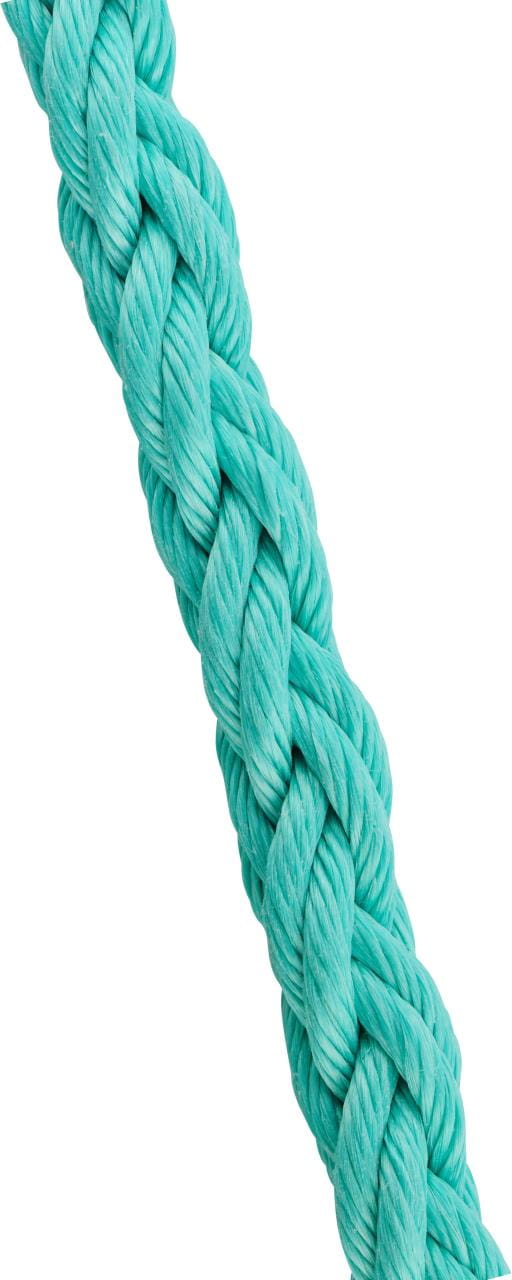
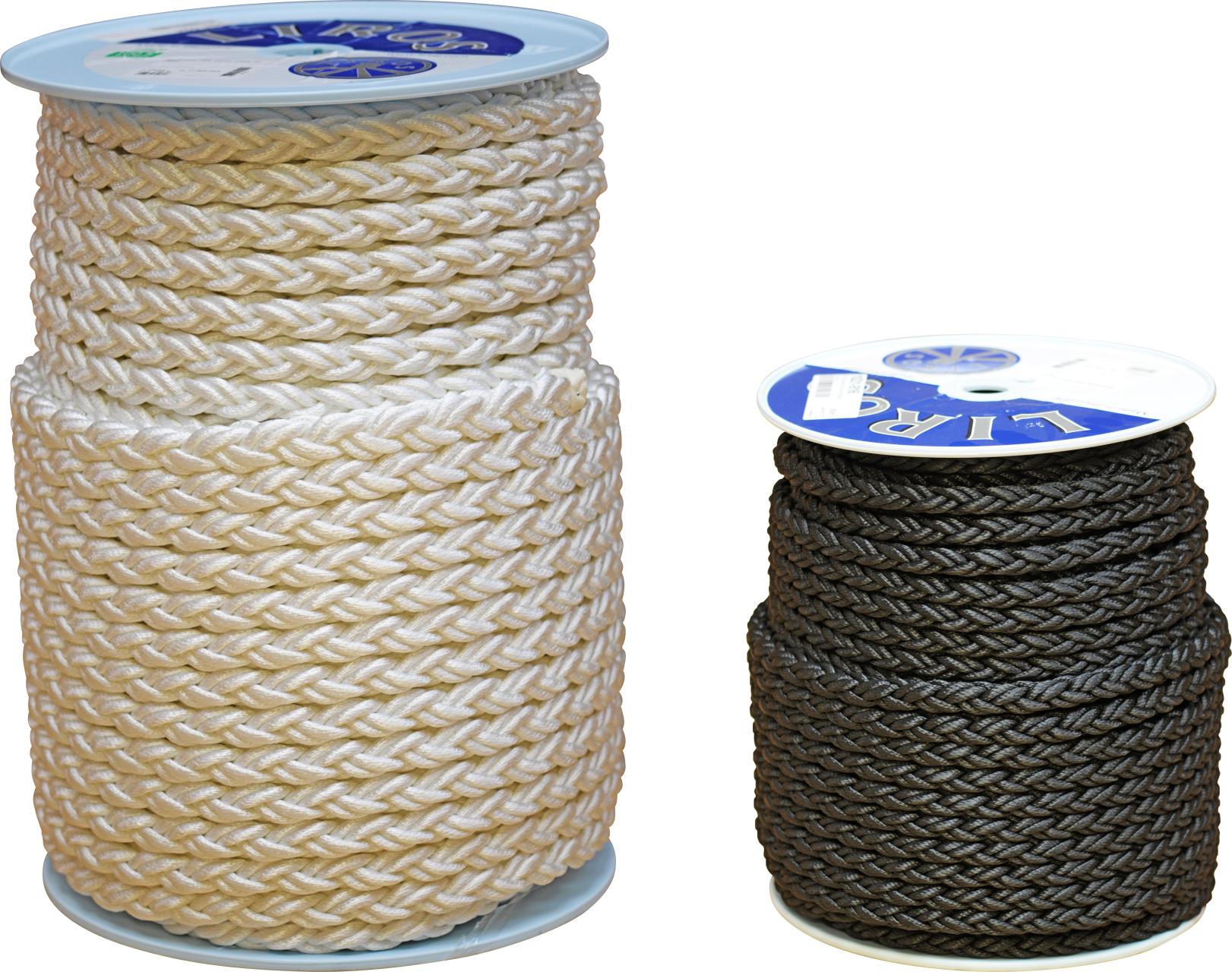
A ship moored or anchored at its berth is constantly being pulled back and forth by the wind or waves. As with the towing of a vehicle, the constant back and forth movement results in load peaks that the ropes used must be able to withstand even under extreme conditions. Lines with the appropriate elongation behavior can absorb the occurring loads well and dampen the peaks. On the one hand, this prevents the lines from breaking and, on the other, it reduces the risk of deck fittings such as cleats, bollards and jibs being subjected to heavy loads or even being torn out of their screw connections. The anchor line and towline are exposed to particularly high load peaks due to heaving and sheering of the boat. In addition to an appropriate length, it is important to select the right material and the correct line diameter. Oversizing ropes is not advantageous in this case, as the gain in breaking load is diminished by the loss of elasticity.
Mooring, anchoring & towing line